Search This Blog

Monday, December 17, 2012

Bacopa, Bacopa Monnieri, Brahmi, ब्राह्मी


Bacopa monnieri, waterhyssop, brahmi, thyme-leafed gratiola, water hyssop, herb of grace, Indian pennywort


Bacopa has traditionally been employed as a neurological tonic and cognitive enhancer, and it is currently being studied for its possible neuroprotective properties.

Traditionally, it was used as a brain tonic to enhance memory development, learning, and concentration, and to provide relief to patients with anxiety or epileptic disorders. The plant has also been used as a cardiac tonic, digestive aid, and to improve respiratory function in cases of bronchoconstriction. Recent research has focused primarily on Bacopa’s cognitive-enhancing effects, specifically memory, learning, and concentration, and results support the traditional Ayurvedic claims. Research on anxiety, epilepsy, bronchitis and asthma, irritable bowel syndrome, and gastric ulcers also supports the Ayurvedic uses of Bacopa. Bacopa’s antioxidant properties may offer protection from free radical damage in cardiovascular disease and certain types of cancer.

A study is reported on the effects of Brahmi (Bacopa monniera) on human memory. Seventy-six adults aged between 40 and 65 years took part in a double-blind randomized, placebo control study in which various memory functions were tested and levels of anxiety measured. There were three testing sessions: one prior to the trial, one after three months on the trial, and one six weeks after the completion of the trial. The results show a significant effect of the Brahmi on a test for the retention of new information. Follow-up tests showed that the rate of learning was unaffected, suggesting that Brahmi decreases the rate of forgetting of newly acquired information. Tasks assessing attention, verbal and visual short-term memory and the retrieval of pre-experimental knowledge were unaffected. Questionnaire measures of everyday memory function and anxiety levels were also unaffected.
Brahmi is used for Alzheimer's disease, improving memory, anxiety, attention deficit-hyperactivity disorder (ADHD), allergic conditions, irritable bowel syndrome, and as a general tonic to fight stress. People also take brahmi to treat backache, hoarseness, mental illness, epilepsy, joint pain, and sexual performance problems in both men and women. It is also sometimes used as a “water pill.” Bacopa has been used in traditional Ayurvedic treatment for epilepsy and asthma. It is also used in Ayurveda for ulcers, tumours, ascites, enlarged spleen, indigestion, inflammations, leprosy, anaemia, and biliousness.
The most commonly reported adverse side effects of BM in humans are nausea, increased intestinal motility, and gastrointestinal upset. Improving memory. Some research shows that taking specific brahmi extracts (KeenMind; BacoMind) improves some measure memory in otherwise healthy older adults. Brahmi appears to be no more effective than a sugar pill in keeping IBS symptoms from returning after remission.
      Be careful not to confuse brahmi (Bacopa monnieri) with Gotu Kola and other natural medicines that are also sometimes called brahmi.  Gotu Kola(Centella asiatica) is also known as sarswathi aku, kudavan, muththil, kudangal, thankuni, मधुकपर्णी, mandukaparni, ब्राम्ही(Marathi), vallaarai, brahmi booti.  In Ayurveda supplements made from Gotu Kola(Centella asiatica) are promoted as cancer treatment; however according to the American Cancer Society, "available scientific evidence does not support claims of its effectiveness for treating cancer or any other disease in humans.


Calamus, Sweet Flag, Bach, बच, German Ginger

Calamus, Sweet Flag, Bach, बच, German Ginger
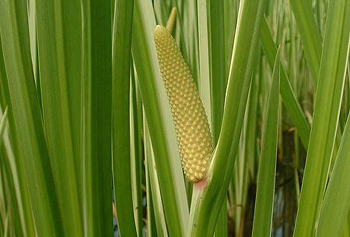
Acorus calamus commonly known as Sweet Flag or Calamus (बच). In crystallized form, it is called "German Ginger". Other names include beewort, bitter pepper root, calamus root, flag root, gladdon, myrtle flag, myrtle grass, myrtle root, myrtle sedge, pine root, sea sedge, sweet cane, sweet case, sweet cinnamon, sweet grass, sweet myrtle, sweet root, sweet rush, and sweet sedge.


Acorus calamus(बच) is used medicinally for a wide variety of ailments, and because of its aroma its essential oil valued in the perfume industry. The scented leaves and rhizomes have traditionally been used medicinally and to make fragrances. Dried and powdered rhizome is used as a substitute for ginger, cinnamon and nutmeg. Sweet flag has a very long history of medicinal use. Both roots and leaves of Acorus calamus have shown antioxidant, antimicrobial and insecticidal activities. It is widely employed in modern herbal medicine as stimulant, sedative, laxative, diuretic, and carminative properties.
It is considered as a powerful aphrodisiac and as a stimulant. It is believed by some that calamus is a hallucinogen. But in Ayurveda Acorus calamus is used to counter the side effects of all hallucinogens. It shows neuroprotective effect against stroke and chemically induced neurodegeneration in rats. Specifically, it has protective effect against acrylamide induced neurotoxicity.
Acorus calamus may prove to be an effective control measure against cattle tick.

Note: It should not be confused with diploid Acorus Americanus. Acorus calamus and products derived from acorus calamus (such as its oil) were banned in 1968 as food additives and medicines by the United States Food and Drug Administration.


Sunday, December 16, 2012

Ashwagandha (अश्वगन्धा) - Withania Somnifera

Ashwagandha (अश्वगन्धा): Health Benefits
English Name: Ashwagandha, Botanical Name: Withania Somnifera, Common Indian Name: अश्वगन्धा (Indian Ginseng), Poison Gooseberry, Winter Cherry
In Ayurveda (आयुर्वेद), the berries and leaves of Withania Somnifera (अश्वगन्धा) are locally applied to tumors, tubercular glands, carbuncles, and ulcers. The roots of Withania Somnifera (अश्वगन्धा) are used to prepare the herbal remedy Ashwagandha (अश्वगन्धा), which has been traditionally used to treat various symptoms and conditions. Withania Somnifera is widely considered as the Indian ginseng. In Ayurveda, it is classified as a rasayana (rejuvenation रसायन) and expected to promote physical and mental health, rejuvenate the body in debilitated conditions and increase longevity. Ashwagandha is used to treat a number of disorders that affect human health including central nervous system (CNS) disorders, particularly in epilepsy, stress and neurodegenerative diseases such as Parkinson's and Alzheimer's disorders, Tardive Dyskinesia, cerebral ischemia, and even in the management of drug addiction. The most useful usage is to reduce stress and perhaps aid in sleep.
It improves physical energy and athletic ability, increase immunity to colds and infections and increase sexual capacity and fertility. It is general energy-promoting, disease-preventing tonic. It shows significant increase in white blood cell counts. It is a mild sedative effect on the central nervous system. It increases vitality, particularly when recovering from chronic illnesses and pain management for arthritic conditions. It also helps regulate blood sugar. It may be a promising alternative for cancer treatment and prevention. It shows positive effects on the endocrine, cardio, and central nervous systems. It is one herb that could help your body produce its own thyroid hormones.
Ashwagandha is used to restore male libido, cure impotence and increase male fertility. It has been revered over time for its ironic dual capacity to energize and calm at the same time. Preliminary studies indicate that the herb helps to reduce the negative effects of stress, slow tumor growth, treat anxiety and insomnia, and reduce cholesterol in addition to increasing sexual performance. Stress can cause fatigue, often manifesting as “hyper” signs like agitation and difficulty sleeping.  By providing a nourishing, energizing effect, you can support a healthy nervous system.  When the stress doesn’t impact the nervous system as strongly, the “hyper” signs will naturally resolve over time, allowing for a calming effect.  This quality of Ashwagandha makes it a prime supplement to use in the toning and rejuvenation process. Because Ashwagandha has traditionally been used to treat various diseases associated with nerve tissue damage related to the destructive molecules known as free radicals, some researchers have speculated that the herb may have antioxidant properties. Free-radical damage plays a role in normal ageing and in such neurological conditions as epilepsy, Parkinson's disease and Alzheimer's disease. In addition to its dual energizing/calming effect, Ashwagandha offers a number of benefits:
1.                Supports a healthy immune system
2.                Calms mental processes
3.                Fosters healthy sleep patterns
4.                Benefits a healthy reproductive system in both males and females
5.                Sustains energy levels, strength, and vitality, including with physical activity
6.                Supports healthy back and joints
7.                Combats the effects of stress
8.                Improves learning, memory, and reaction time
9.                Reduces anxiety and depression without causing drowsiness
10.           Stabilizes blood sugar
11.           Lowers cholesterol
12.           Reduces brain-cell degeneration
13.           Contains anti-malarial properties
14.           Offers anti-inflammatory benefits
15.           Antioxidant effects
16.           Reduction of blood pressure or hypertension
17.           Reduction of feelings such as anxiety, edginess, irritability, stress
18.           Anti-inflammatory effects which stops or delays the inflammatory process
19.           Improvement of concentration as well as memory
20.           Taming of tension and headache
21.           Promotion of relaxation leading to restful sleep
22.           Promotion of thyroid function in a healthy way
23.           Reduction of effects of stress
24.           Reduction of bad cholesterol
25.           Protection and nourishment of the liver
26.           Natural steroidal effects
27.           Increase in the red blood cell production
28.           Increase in endurance and energy
29.           Suppression of pain symptoms
30.           Promotion of mental satisfaction as well as calmness
31.           Building up of stamina
32.           Strengthening the muscles of the cardiovascular system
NOTE: It high doses it may have steroidal activity.  Ashwagandha be avoided in pregnancy. This is because of its spasmolytic activity on the uterus, and its induction of abortions in animals when given in very large doses. When used with other respiratory depressants, Ashwagandha can be problematic.

Arjun (Terminalia arjuna) अर्जुन

Arjun
English Name: Arjun, Botanical Name: Terminalia arjuna, Common Indian Name: अर्जुन
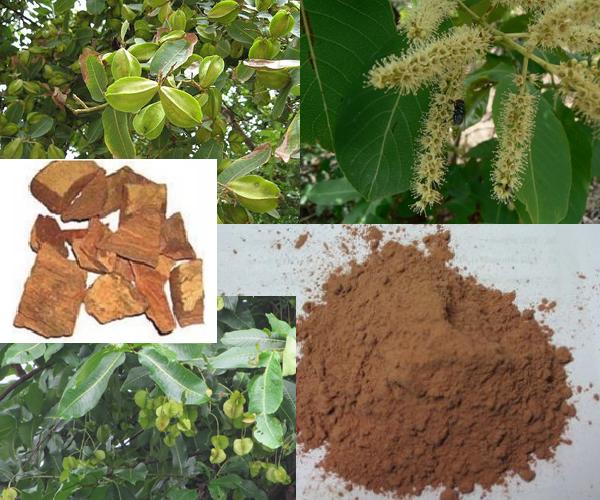
HEART disease is a leading cause of death and disability  in world. Arjuna(अर्जुन) supports proper function of heart. Arjun nourishes & supports the heart muscle thereby helps stimulating blood circulation & allowing an increase of oxygen flow to the heart. It has analgesic and anti-inflammatory properties. The Arjuna(अर्जुन) is used in Ayurveda(आयुर्वेद) as a treatment for heart disease.

CHILGOZA Pine Nut चिलगोज़ा (Dry Fruit Nut)

CHILGOZA (Pine Nut )Dry Fruit Nut: Health Benefits 
Pine nuts are the edible seeds of pines (family Pinaceae, genus Pinus). About 20 species of pine produce seeds large enough to be worth harvesting; in other pines the seeds are also edible, but are too small to be of great value as a human food.
Health benefits of Pine Nuts चिलगोज़ा
                     Health benefits of Pine Nuts चिलगोज़ा
CHILGOZA (Pine Nut )Dry Fruit Nut: Nutritional information
Pine nuts contain, depending on species, 10–34% protein, with Stone Pine having the highest content. They are also a source of dietary fiber.
100g of dried pine nuts contains:
Pine Nuts (Dried, with Shell)
Carbohydrate Factor: 4.07 Fat Factor: 8.37 Protein Factor: 3.47 Nitrogen to Protein Conversion Factor: 5.3
Refuse: 23% == Refuse Description: Shells
Nutrient (Proximates)
Unit
per 100 g
Water
g
2.28
Energy
kcal
673
Protein
g
13.69
Total lipid (fat)
g
68.37
Ash
g
2.59
Carbohydrate, by difference
g
13.08
Fiber, total dietary
g
3.7
Sugars, total
g
3.59
Sucrose
g
3.45
Glucose (dextrose)
g
0.07
Fructose
g
0.07
Lactose
g
0
Maltose
g
0
Galactose
g
0
Starch
g
1.43
Minerals
Calcium, Ca
mg
16
Iron, Fe
mg
5.53
Magnesium, Mg
mg
251
Phosphorus, P
mg
575
Potassium, K
mg
597
Sodium, Na
mg
2
Zinc, Zn
mg
6.45
Copper, Cu
mg
1.324
Manganese, Mn
mg
8.802
Selenium, Se
µg
0.7
Vitamins
Vitamin C, total ascorbic acid
mg
0.8
Thiamin
mg
0.364
Riboflavin
mg
0.227
Niacin
mg
4.387
Pantothenic acid
mg
0.313
Vitamin B-6
mg
0.094
Folate, total
µg
34
Folic acid
µg
0
Folate, food
µg
34
Folate, DFE
µg
34
Choline, total
mg
55.8
Betaine
mg
0.4
Vitamin B-12
µg
0
Vitamin B-12, added
µg
0
Vitamin A, RAE
µg
1
Retinol
µg
0
Carotene, beta
µg
17
Carotene, alpha
µg
0
Cryptoxanthin, beta
µg
0
Vitamin A, IU
IU
29
Lycopene
µg
0
Lutein + zeaxanthin
µg
9
Vitamin E (alpha-tocopherol)
mg
9.33
Vitamin E, added
mg
0
Tocopherol, beta
mg
0
Tocopherol, gamma
mg
11.15
Tocopherol, delta
mg
0
Vitamin D (D2 + D3)
µg
0
Vitamin D
IU
0
Vitamin K (phylloquinone)
µg
53.9
Lipids
Fatty acids, total saturated
g
4.899
Fatty acids, total monounsaturated
g
18.764
Fatty acids, total polyunsaturated
g
34.071
Cholesterol
mg
0
Stigmasterol
mg
0
Campesterol
mg
20
Beta-sitosterol
mg
132
Amino Acids
Tryptophan
g
0.107
Threonine
g
0.37
Isoleucine
g
0.542
Leucine
g
0.991
Lysine
g
0.54
Methionine
g
0.259
Cystine
g
0.289
Phenylalanine
g
0.524
Tyrosine
g
0.509
Valine
g
0.687
Arginine
g
2.413
Histidine
g
0.341
Alanine
g
0.684
Aspartic acid
g
1.303
Glutamic acid
g
2.926
Glycine
g
0.691
Proline
g
0.673
Serine
g
0.835
Alcohol, ethyl
g
0
Caffeine
mg
0
Theobromine
mg
0
Flavonoids
Proanthocyanidin
mg
0
Pine nut oil

Pine nuts can be pressed to extract pine nut oil, which is valued for its mild, nutty flavour. One study indicates Korean pine nut oil may suppress appetite.